
In the Race Towards Trademark Protection, Female Athletes are Left Behind.
The fight for equal compensation for the use of an athlete’s NIL in collegiate athletics is far from over, but how do the implications resulting from current NIL litigation reflect the discrepancies in the broader trademark application pool?
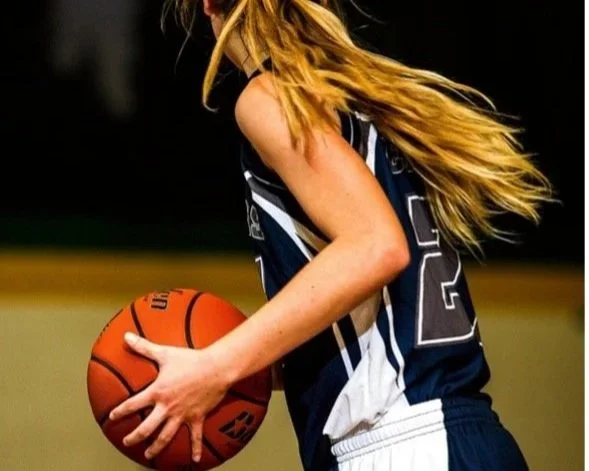
With the National Collegiate Athletic Association’s (“NCAA”) recent regulatory changes permitting compensation for the use of collegiate athletes’ Name, Image, and Likeness (“NIL”), courts are now tasked with determining the appropriate compensatory value for each athlete’s NIL.
The conversation around compensation within collegiate athletics recently began shifting. Prior to June 2021, collegiate athletes faced significant compensation governance at the hands of the NCAA. Much of the recent conversation surrounding an athlete’s right to be compensated for the use of their NIL can be attributed to the outcome of the recent class action suit collegiate players brought against the NCAA. Nat’l Collegiate Athletic Ass’n v. Alston, 594 U.S. 69,73 (U.S. 2021). Fed up with the NCAA’s policy limiting compensation, the group of current and former players alleged that the compensation restrictions directly violated §1 of the Sherman Antitrust Act (15 U.S.C. § 1 (2004)). Id. at 73. The Supreme Court of the United States (“SCOTUS”) unanimously affirmed the decision that NCAA compensation regulations directly violated Antitrust law by placing a cap on compensation limiting competition between collegiate programs. Id. at 107. Limiting compensation to scholarships prevented programs from providing additional benefits or incentives to attract ideal athletes to their program, essentially restricting competition. Id. at 82.
The restriction of competitive recruiting within collegiate athletics allows for programs with continuously high-ranking athletic departments to continue to obtain highly sought after players. This practice essentially limits the scope of competition within collegiate athletics as high ranking programs continue to pull in high-performing players, ensuring the program will remain highly ranked. The court’s decision in Nat’l Collegiate Athletic Ass’n immediately impacted NCAA regulations, leading to the suspension of their current amateurism rules. The NCAA first sought to establish amateurism rules, including forms of compensation (i.e. pay for play, product enforcement, signing with professional agencies, or receiving financial benefits from professional sports organizations) to restrict measures that would ensure college athletes were recognized as students first, athletes second. NCAA Amateurism Rules and Certification, NCSA Sports, https://www.ncsasports.org/ncaa-eligibility-center/amateurism-rules (last visited Feb. 1, 2026). The removal of NCAA amateurism rules allowed for a sharp pivot in athletic compensation, as collegiate athletes were newly permitted to seek direct compensation based on the use of their NIL through product endorsement deals or paid appearances. The shift in compensation practices led to the immediate need for collegiate athletes to seek trademark protection for the use of their NIL. The Lanham Act (15 U.S.C. § 1114) specifically exists to protect owners from the unlawful use of their federally registered trademarks. Section 1(a) protects against the counterfeit, copy, or imitation of registered trademarks when such use will cause confusion, deceit, or mistake. Id. Without securing federal trademark registration for their NIL, collegiate athletes face the significant threat of lacking legal remedy to combat the use of their NIL, especially in instances where brands falsely obtain players’ images to promote products or imply sponsorship.
As the conversation surrounding collegiate athletes’ rights to compensation for the use of their NIL continues to evolve, athletes are recognizing the true value attached to their brand image. The recognition of the inherent value of a player’s own brand image has led many current and former athletes to come forward seeking direct compensation and back-pay from their university’s athletic programs for using their NIL. These demands ultimately culminated this past June in the landmark settlement decision of House v. NCAA. House v. NCAA, 545 F. Supp. 3d 804, 808 (N.D. Cal. 2021). This historic settlement provided a combined backpay of nearly $2.8 billion allocated amongst former and current collegiate athletes who participated in athletic programs between 2016 and 2024. Id. at 820. This decision further called for the development of new revenue-sharing practices, enabling universities to directly compensate current players for the use of their NIL. Id.
Following the settlement reached in House v. NCAA, the released distribution model for backpay revealed that ninety percent of the allotted compensation would be awarded to male athletes participating in football and basketball programs in Power five conference schools. The remaining ten percent would be evenly divided between women’s basketball players and all remaining D1 athletes. Nicole A. Buffalano, et. al., From Settlement to Scrutiny: Employment, NIL, and Title IX in College Sports, (Aug. 26, 2025), https://www.morganlewis.com/pubs/2025/08/from-settlement-to-scrutiny-employment-nil-and-title-ix-in-college-sports (last visited Feb. 1, 2026). In response to this allocation, eight female athletes have motioned to appeal the settlement, on the grounds that the distribution model was in direct disregard of Title IX protections. Id. The basis of the female athletes’ appeal is founded on the gross disproportion of the division of the funds in the settlement, with the majority of funds being received by male athletes. Id. This is not the first instance of female athletes expressing discontentment with disproportional NIL compensation. In December of 2023, twenty-three female athletes brought an action together against the University of Oregon, alleging the university had continuously undermined female athletes’ success through consistently providing disproportional levels of publicity appearances, NIL-training, and NIL opportunities to female athletes. Schroeder v. Univ. of Or., No. 6:23-CV-01556-MC, 2025 WL 1019760, at *1 (D. Or. 2025). While the litigation continues, the University of Oregon’s female athletes have specifically showcased the fact that the University’s male athletes are consistently among the top NIL earners in the nation, whereas the female athletes remain unranked in NIL compensation. Id. at *12. The significant lack of opportunity for female athletes to be compensated for their NIL, paired with the deficiency in NIL-training opportunities for female athletes, leaves them vulnerable to trademark infringement. The lack of emphasis placed upon the value captured by their individual brand makes these female athletes less likely to seek legal action to protect the use of their NIL. An athlete’s brand image being tied to their name and identity presents a unique challenge as failing to secure proper trademark protection can ultimately lead to a combined loss of both personal and professional identity in instances of trademark infringement.
Many incorrectly assume the allocation of funds for something as trivial as NIL in collegiate athletics has no relative implication on the trends of society. The University of North Carolina School of Law’s article analyzes the demographic discrepancies in both gender and race that exist in trademark prosecution. William Michael Schuster, et. al., An Empirical Study of Gender and Race in Trademark Prosecution, 94 S. Cal. L. Rev. 1407, 1439–51 (2021) (discussing trends in the demographics of the applicant pool for trademark registration). The study provides significant data surrounding the demographics of the applicant pool for trademark registration in the United States over the past forty years. Id. at 1439. The study ultimately concludes that while the total number of both women and minority applicants has increased in the past forty years, the number of applicants has significantly declined relative to the proportion of the population that women and minorities represent in the United States. Id. at 1465. When analyzing the general implications of the data the study fundamentally reveals that “both women and minorities are substantially underrepresented in the trademark applicant pool of individual applicants.” Id.
The distribution model of the settlement allocation in House v. NCAA directly aligns with the data presented by The University of North Carolina School of Law. The more that an individual is led to believe their brand image is of lesser value than the brand image of another, the less likely they are to seek trademark protection. Particularly for female athletes, the settlement outcome in House v. NCAA suggests the use of female athletes NIL is eighty-five percent less valuable to the university compared to the use of male athletes NIL. See House, 545 F. Supp. 3d at 820. The litigation specifically sought to compensate all athletes in collegiate programs through back pay between 2016 and 2024 who had been denied the opportunity to profit off their NIL. Id. Thus, the distribution model specifically exemplifies that had those athletes been able to seek compensation from their university for the use of their NIL during that period male athletes personal brand image would have provided ninety percent of the total benefit or value to the university. Id. The true danger lies within decisions such as these that perpetuate the idea of one brand holding more value than another as it can push individuals away from seeking federal trademark registration, the absence of which leaves an individual vulnerable to brand infringement. This settlement distribution model can draw a parallel to the general trademark applicant pool, reflecting the substantial underrepresentation of female and minority trademark applicants, many of whom have been led to believe their brand holds a lesser value than others. 94 S. Cal. L. Rev. at 1439.
Through the grievances expressed by female athletes in cases like Schroeder v. Univ. of Or., we understand the framework that establishes a lack of value attributed to female athlete’s brand image, as female athletes face deficiencies in NIL training and lack compensation opportunities. See Schroeder, 2025 WL 1019760. Similarly, female athletes’ motion to appeal the settlement distribution model, which stemmed from the decision in House v. NCAA, highlights the extent of the economic discrepancies in NIL compensation based on demographics. House, 545 F. Supp. 3d at 820. While many of us will not be lacing up our shoes to take on collegiate sports in the near future, the implications of unequal compensation for NIL stretch far beyond the world of jerseys and cleats. The importance of trademark protection lies the core of this compensation. If there was no value attributed to an individual’s NIL, athlete or not, this litigation would cease to exist. Trademark litigation is imperative to ensuring the protection of an individual or entities identity and works to preserve the value of a brand. Without the trademark protections provided by acts such as The Lanham Act, brands are vulnerable to reputational harm and risk unwarranted exploitation of their brand image’s economic value. The expansion of trademark education and the promotion of the inherent value every brand holds, regardless of demographics, can mitigate demographic discrepancies within the trademark applicant pool. Ultimately, decreasing demographic discrepancies within the trademark applicant pool will help ensure a greater equity of brand protection strengthening the general business environment.