
From the Court to the Courtroom: How the Right of Publicity Affects Your March Madness Bracket
College basketball is undergoing a major legal shift. What once revolved around eligibility and recruiting is now shifting to contract enforcement and litigation. At the center of this change is the right of publicity, with schools and athletes clashing over who owns the athletes name, image, and likeness.
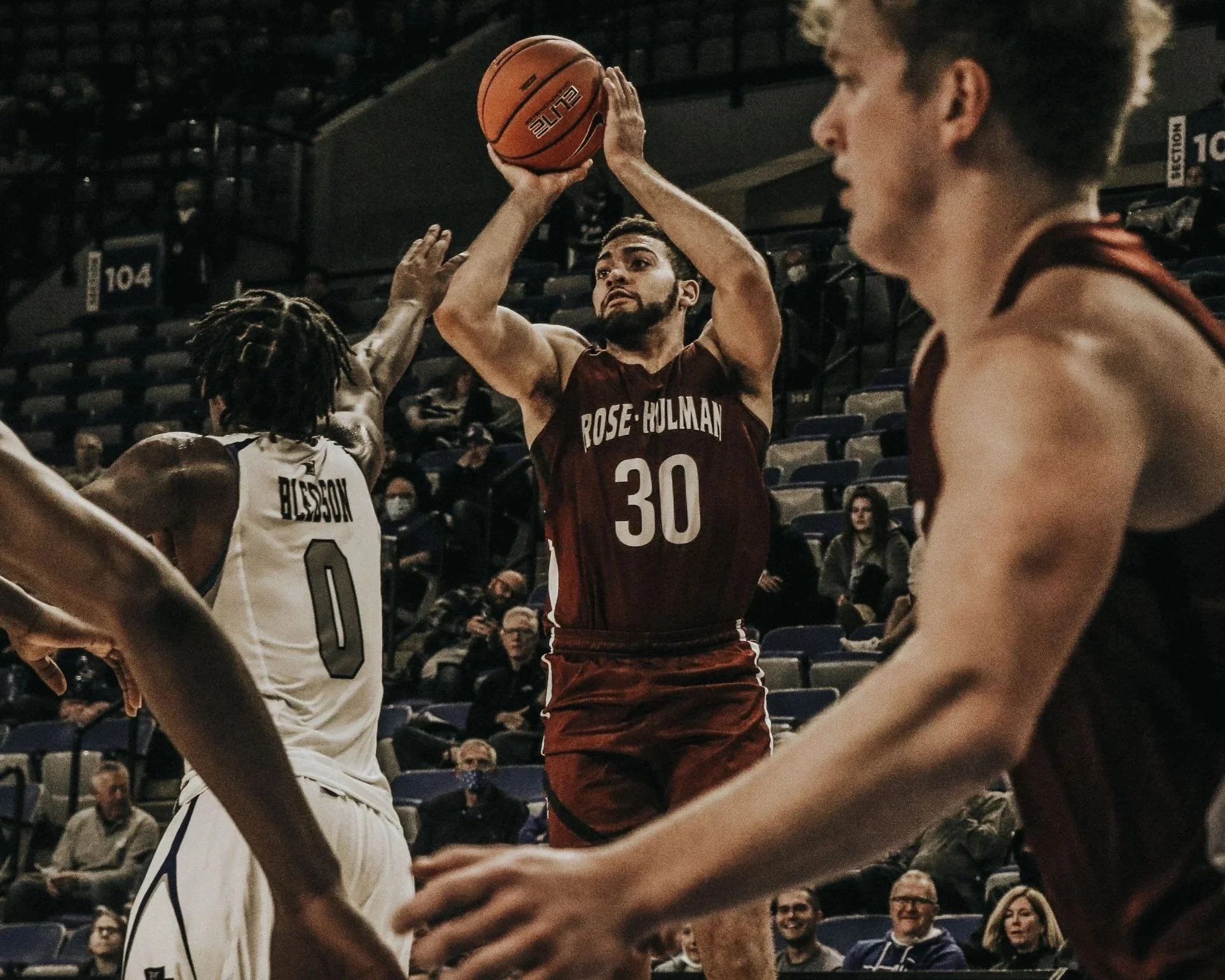
March Madness has become one of the most beloved traditions in American sports, defined by buzzer-beaters, Cinderella stories, and crafting the perfect bracket to secure a prize pot. What makes March Madness so compelling is the relationship people have to these teams and the players. Athletes developed strong school pride for the team they played for, and their mobility was not strictly enforced, which would give rise to different teams winning the tournament every year. This is what made crafting a March Madness bracket exciting, the unpredictability of teams and their players for that specific season. However, courts are increasingly becoming more involved with athlete mobility in the recruiting market, with schools litigating to enforce their Name, Image, and Likeness Agreements (NIL) and arguing that an athlete cannot transfer so fluidly because of the harm it can do the school. See Alison Silveria, Lilah Wylde & Natalie Costero, Why The Road To Final Four Runs Through the Courthouse, Law360 (March 2026). Accordingly, the courts’ enforcement of these agreements will shape a roster for a school’s team and the excitement and unpredictability that March Madness has will dissipate.
The case that defined the right of publicity is Zacchini v. Scripps-Howard Broadcasting Co., and in this case, Zacchini performed a 15 second “human cannonball” act and a news station broadcasted his performance. Zacchini v. Scripps-Howard Broadcasting Co., 97 U.S. 2849, 2854 (1977). Zacchini objected to the news station filming his act, but the station aired it anyway, and Zacchini sued for unlawful appropriation of his professional property. See id. at 2850. The Court was faced with the issue of whether the First Amendment would protect such conduct or recognize that a person’s name, image, and likeness has real property value. See id. Ultimately, Zacchini prevailed and the court reasoned that a person has “personal control over commercial exploitation of his personality and the exercise of his talents.” Id. at 2854. Zacchini recognized the exploitations of a persons talent and ensured that powerful entities rightfully compensate a person for their identity. See id. at 2859.
Moreover, the relationship between schools and their athletes has evolved throughout the timeline of college sports. NCAA v. Board of Regents of the University of Oklahoma highlights the “amateurism” view of student athletes. NCAA v. Board of Regents of the University of Oklahoma 104 U.S. 2948, 2953 (1984). The NCAA wanted to keep college sports connected to education and amateurism, focusing on the notion that athletes are students first. See id. at 2960. However, the appeal to college sports could not be contained, and a sport became more than just an extracurricular activity for athletes. Schools also recognized the growing popularity of college sports and increasingly invested money into their athletic programs, often benefiting from the talents and marketability of their athletes. Amateurism, as it once existed, has largely disappeared, and many athletes now choose schools based on where they can best showcase their abilities rather than solely on educational opportunities. As a result, the relationship between schools and athletes has evolved into a business arrangement, which naturally gives rise to conflict.
The right of publicity is at the center of NIL agreements, and schools have recognized that athletes are marketable assets that they can benefit from. When a school has a right of publicity, they have the right to control an athlete’s name, image and likeness, and therefore, can decide how to exploit the athlete’s identity to enhance the school’s reputation in the sport. William L. Prosser, Privacy, 48. Cal. L. Rev. 383, 407 (1960). Schools have increasingly shifted to this view of athletes as economic value rather than students who want the freedom to play a sport where they love. In NCAA v. O’Bannon, former athletes sued the NCAA over the use of the likenesses in video games without compensation, even though schools and third parties continued to profit from their reputation. See NCAA v. O’Bannon, 802 F.3d 1049, 1055 (9th Cir. 2015). Colleges were commercializing athletes and making money, while the athletes had no say or payment in their contribution. See id. at 1057. The holding in this case set up a system where schools could continue to profit off athletes without compensating them, and once schools discovered how economically valuable athletes are, their enforcement of right of publicity provisions outlined in player’s contracts became more aggressive. See id. at 1078.
Now with this system established, schools began the shift from relaxed player mobility to forced athlete enrollment at their institutions. Alston gave back athletes some power that O’Bannon stripped away and allowed athletes to get compensated for their NIL. See NCAA v. Alston, 141 U.S. 2141, 2166 (2021). The Court found that the NCAA’s restrictions on education-related benefits for student athletes violates federal antitrust law, and this demonstrates how courts began to shift to a stricter scrutiny regarding the NCAA’s regulations. With this increased power, athletes were able to transfer more easily and sign deals quickly, schools and athletes would negotiate deals more frequently and their relationship was viewed as a partnership rather than a commercial agreement. See id. at 2150, 2152. Because of this, NIL agreements and athlete contracts were not enforced stringently, with schools recognizing the importance of athletes having pride playing for their school rather than being forced. If NIL agreements were trying to be enforced, courts would not always view them as valid and favor an athletes right of publicity. See Alison Silveria, Lilah Wylde & Natalie Costero, Why The Road To Final Four Runs Through the Courthouse, Law360 (March 2026).
However, there has been a current shift in this view, and schools and courts have slipped back into the O’Bannon approach of controlling athletes exploiting their NIL for profit. In Duke v. Mensah, Mensah sought to transfer to the University of Miami even though he had an NIL agreement with Duke. See Duke Univ. v. Mensah, No. 26CV000605-310, 2026 WL 17630. at 2. (N.C. Super. Ct. Jan. 19, 2026) (trial pleading). Duke argued that the transfer would violate the agreement and bring financial harm tied to Mensah’s value. See id. at 5. The court ordered a temporary restraining order (TRO) - TROs can freeze athlete movement, enforce exclusivity clauses etc. - and reasoned that NIL agreements involve real economic value and a breach can cause irreparable harm to a university. See id. at 15. This case emphasizes the current trend that courts have adopted of treating NIL agreements as commercial contracts, and an athletes identity is now for a school to exploit and profit off of. Since UGAA v. Wilson, athletes have begun pushing back, with Wilson arguing that his NIL agreement was merely a draft and not a binding contract. See Alison Silveria, Lilah Wylde and Natalie Costero, Why The Road To Final Four Runs Through the Courthouse, (March 2026). While Wilson was ultimately able to transfer, this made schools aware that they need to start outlining their contracts more explicitly and clearly state the consequences of breach. University of Cincinnati v. Sorsby exemplifies the extent schools are willing to reach in order to protect their reputation, with Cincinnati filing a suit against Brendan Sorsbsy alleging he breached his NIL agreement and needed to pay $1 million in termination/liquidated damages fee. See id. The court has not made a final decision yet, but this case shows how schools are becoming more aggressive in their enforcement of these NIL agreements and are willing to destroy an athlete’s reputation and future earnings in order to See id.
Courts are now having to review these athlete contracts and their determination will ultimately decide a school’s roster for the season. Schools are now understanding that cultivating a strong legal strategy and contract language is just as important as recruiting. Making a good contract can give schools competitive advantages during the season because they can lock in players for their teams and not have to worry about players transferring. March Madness is the most important tournament of the year for college basketball, and unfortunately, teams consist of players who have no control over their NIL and certain schools now dominate the season due to their stability. Courts have an important decision to make on which view they decide to enforce: a view where athletes are mere economic assets that a school can control and exploit or a view where players have the freedom to transfer and play for a school with pride and heart. Consequently, a bracket-buster may no longer come from a last-second buzzer-beater, but from the rulings of our judicial system.