
How Deepfakes are Changing the Authenticity of Music
AI has created the increasing problem of deepfakes within streaming services, misappropriating artists and causing right of publicity legal battles. Big music corporations and government entities have been faced with not only the act of protecting artists from AI-generated deepfakes but preventing them from reaching a wide audience of listeners.
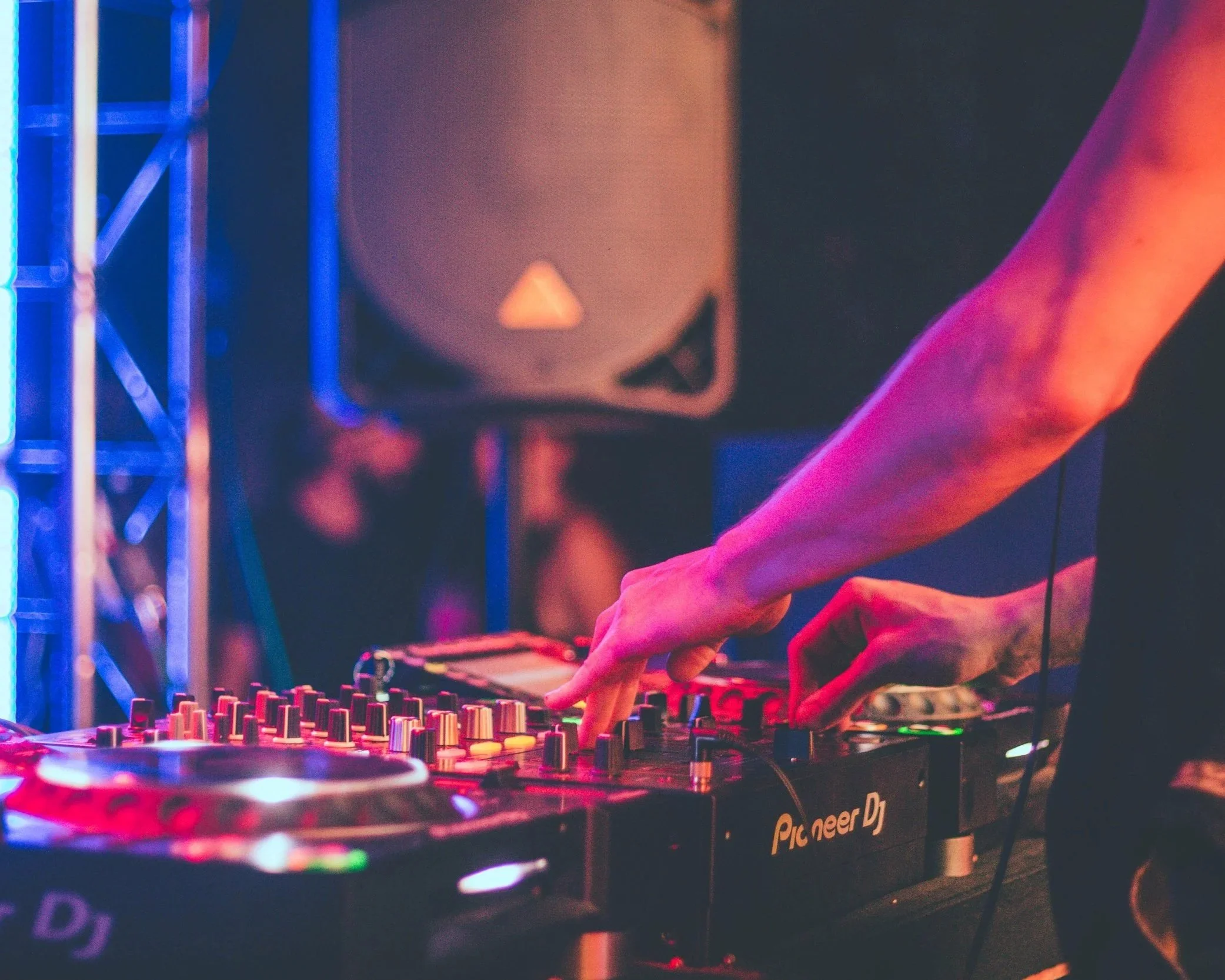
On March 18, news broke that Sony removed over 135,000 deepfake songs from their streaming services, including notorious services such as Spotify and Apple Music. Mark Savage, Sony removes 135,000 ‘deepfakes’ of its artists’ music, BBC (Mar. 18, 2026) https://www.bbc.com/news/articles/cy57593gxe0o. As the music industry continues to rapidly evolve, there is a growing need for large corporations to protect artists who are increasingly vulnerable to the dangers of AI. When AI first emerged, music corporations were excited to explore ways in which AI would make it easier for users to create curated playlists, suggest new songs or artists that were similar to the ones users listened to, and overall make their apps easier to navigate. Megan Parker, Fighting AI and Deepfake Misuse in Music, American Bar (Dec. 2, 2025) https://www.americanbar.org/groups/gpsolo/resources/magazine/2025-nov-dec/fighting-ai-deepfake-misuse-music/. But just as AI use has become increasingly popular within the music industry, so has the problem of misappropriation within intellectual property law.
One of the biggest uncertainties surrounding deepfakes is where to draw the line between innovation and exploitation. Id. The President of Sony’s Global digital business, Dennis Kooker, told the BBC that, “deep fakes are at their worst [when they are] building off and benefitting from the demand the artist has created (and) ultimately detracting from what the artist is trying to accomplish.” Mark Savage, Sony removes 135,000 ‘deepfakes’ of its artists’ music, BBC (Mar. 18, 2026) https://www.bbc.com/news/articles/cy57593gxe0o. A deep fake is created when there is a video, photo, or audio recording that seems real but has been manipulated by AI. U.S. Gov’t Accountability Off., GAO-20-379SP, Science, Technology Assessment, and Analytics: Deepfakes (2020). It has become common on social media platforms to see celebrities or people say or do things that aren’t real. James Arden, Deepfakes and Digital Evidence at Trial: Who Are You Going to Believe, the AI or Your Lying Eyes?, American Bar (June 4, 2024) https://www.americanbar.org/groups/gpsolo/resources/magazine/2024-may-june/deepfakes-digital-evidence-trial/. Although deepfakes can be used as a source of harmless entertainment, it quickly becomes a tool to easily spread misinformation and manipulate a large group of people when not clearly labeled to the public as AI-generated. Didler Ching, et al., Can deepfakes manipulate us? Assessing the evidence via a critical scoping review, National Library of Medicine, (May 2, 2025). Within the music industry there have been clear instances of the unauthorized use of an artist’s voices for a song they did not produce. See Tobias Hess, HAVEN. vs. Jorja Smith: How “I Run” will shape AI music’s future, Fader (Dec. 5, 2025) https://www.thefader.com/2025/12/05/haven-jorja-smith-i-run-shape-music-ai-future. Examples such as using an artist’s voice to sing lyrics that aren’t their own or using Beyonce’s voice to cover “Stay” by Rihanna may seem exciting to users who want to see more collaboration between artists they admire, but in reality, those AI-generated endeavors have become the foundation for typical right of publicity claims. See Megan Parker, Fighting AI and Deepfake Misuse in Music, American Bar (Dec. 2, 2025) https://www.americanbar.org/groups/gpsolo/resources/magazine/2025-nov-dec/fighting-ai-deepfake-misuse-music/
As the music industry grapples with how to sufficiently protect their artists from this rising issue of deepfake use, it creates a new array of legal questions that have stumped courts and creators alike. So far, unlike copyright and trademark law, the United States has not adopted a federal rule to define right of publicity law, but rather each state has created their own statute to address the issue. Id. The California Civil Code § 3344, is one of the most notable statutes, stating that “Any person who knowingly uses another’s name, voice, signature, photograph, or likeness, in any manner, on or in products, merchandise, or goods, or for purpose of advertising or selling, or soliciting purchases of, products, merchandise, goods, or services, without that person’s prior consent, or, in the case of a minor, the prior consent of their parent or legal guardian, shall be liable for any damages sustained by the person or persons injured as a result thereof.” Cal. Civ. Code § 3344 (West, 2026). The statute further explains that the injured party must prove the gross revenue made by the cameo of their deepfake. Id.
AI is not only changing our view on how we address the legalities of using technology, but also how we interpret copyright law. Copyright law protects “original works of authorship fixed in a tangible medium of expression. 17 U.S.C. § 102(a). This means a voice is not copyrightable. See Id. In Midler v. Ford Motor Co., one of the earliest cases to confront this issue, Defendant Ford Motor Co. hired a one of Bette Midler’s backup singers to “sound as much as possible like the Bette Midler record” for a commercial advertising the Ford Lincoln Mercury. Midler v. Ford Motor Co., 849 Cal. Rptr.2d 460 (Cal. Dist. Ct. App. 1988). When the commercial aired, many people mistook the backup singer as Midler herself, which prompted Midler to sue for the protection of her voice. Id. at 462. The court held that sellers in California have appropriated what is not theirs and have committed a tort in California if a distinctive voice belongs to a professional singer, is widely known, and is deliberately imitated in order to sell a product. Id. at 463. Midler presented sufficient evidence that Ford Motor Co. profited from the commercial’s use of imitating her voice as an advertising deception tactic. Id. at 463-64.
The usage of deepfakes within the music industry today has only increased and continues to lead in the forefront of modern legal discussion. Major controversies like HAVEN.’s “I Run,” which uses an AI version of Jorja Smith’s voice, and “Heart on My Sleeve,” which features the AI voices of Drake and the Weeknd, have proven the relevance of this conversation and the necessity for right of publicity legal protection. Tobias Hess, HAVEN. vs. Jorja Smith: How “I Run” will shape AI music’s future, Fader (Dec. 5, 2025) https://www.thefader.com/2025/12/05/haven-jorja-smith-i-run-shape-music-ai-future; Ethan Shanfeld, Ghostwriter’s ‘Heart on My Sleeve,’ the AI-Generated Song Mimicking Drake and the Weeknd, Submitted for Grammys, Variety (Sep. 6, 2023) https://variety.com/2023/music/news/ai-generated-drake-the-weeknd-song-submitted-for-grammys-1235714805/.
One of the ways lawmakers have moved towards protections for artists is by proposing the Nurture Originals, Foster Art, and Keep Entertainment Safe Act, also known as the NO FAKES Act. Maria Elvira, Congresswoman Salazar Introduces the NO FAKES Act, Salazar House, (Apr. 11, 2025) https://salazar.house.gov/media/press-releases/congresswoman-salazar-introduces-no-fakes-act-0. The NO FAKES Act aims to, “hold companies and individuals liable if they produce an unauthorized digital replica of an individual in a performance,” and serve as a “workable national standard.” Id. By implementing these legal safeguards into US law, artists will hopefully feel reassurance within their digital creative space and continue to produce music without the fear of misappropriation. Although this is a rapidly growing and deeply uncharted territory within the world of music, copyright, and right of publicity law, it also establishes a fascinating area of discussion that will significantly impact the way big corporations represent and protect their artists for decades to come.