
Balancing Power and Innovation: A Dilemma
Small and large businesses both face challenges during collaborative efforts that ultimately lead to legal disputes, including the difficulty of protecting copyright while simultaneously promoting innovation. With Disney as a case study, this article posits that legal professionals are tasked with finding the balance between encouraging stricter copyright protections, encouraging further innovation and creativity, and better defining contributory liability.
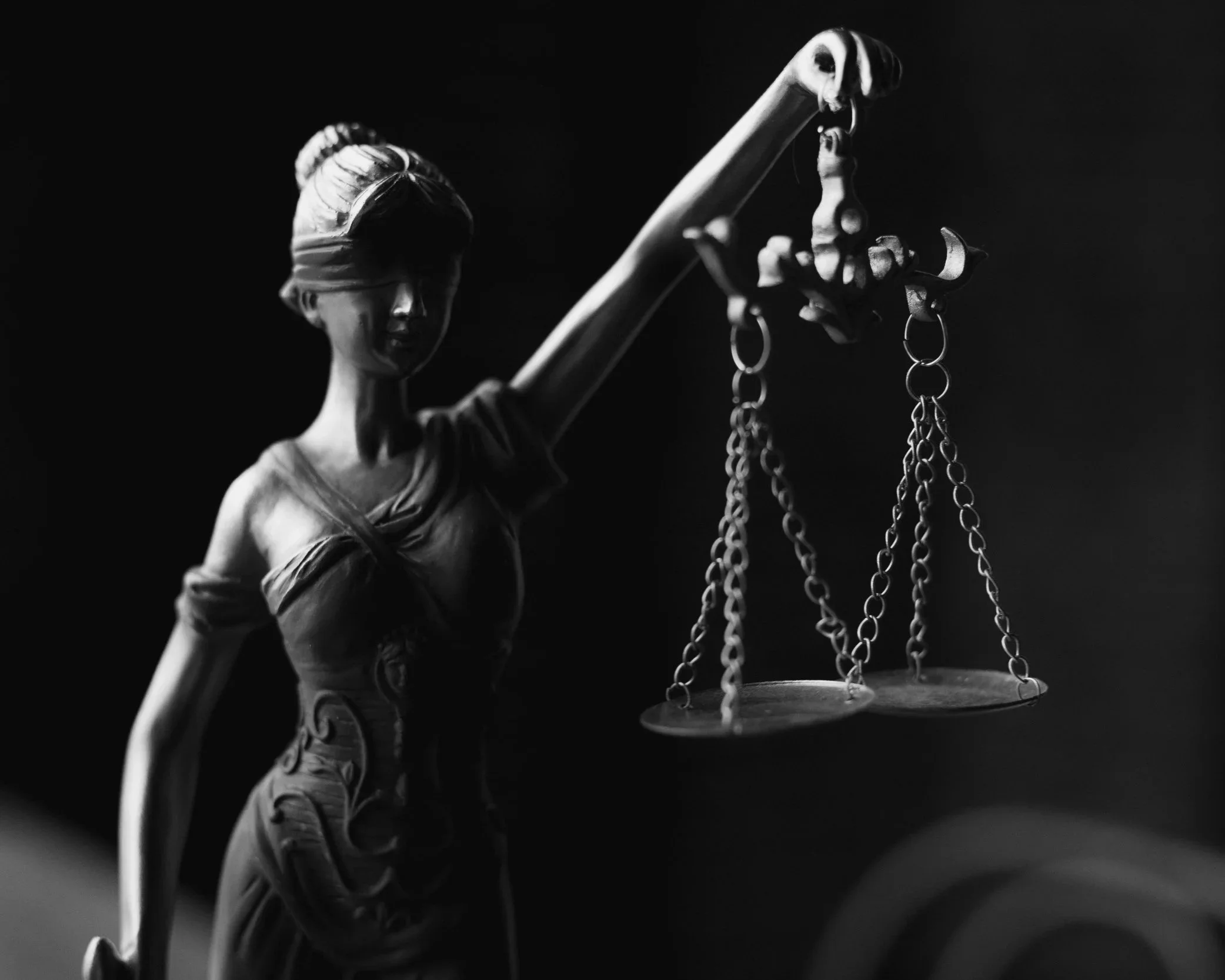
Intellectual property law has often been analogized to the story of David and Goliath. With smaller companies portrayed by David and larger corporations represented by Goliath, the power of the slingshot in influencing the outcome of the battle and leveling the playing field is an adequate portrayal of the purpose of intellectual property law. However, consider a different version of the story: What if both David and Goliath had slingshots, and who would stand victorious came down to who could use it better? Would Goliath’s towering size provide him with an unfair advantage? In the IP law version of the story, the question becomes: If both small and large companies have access to the same intellectual property protections, does victory in a legal battle depend on who wields the law more skillfully, or who possesses the most strength?
Disney is a prime example of a corporation of significant size and strength that aggressively pursues innovation and, in doing so, must balance progress with a respect for the intellectual property rights of smaller innovators. See Jeremy Bowman, What Does Disney Own?, The Motley Fool (Jan. 9, 2026), https://www.fool.com/investing/how-to-invest/stocks/what-does-disney-own/. With limited resources, smaller companies often lack the ability to develop their ideas into marketable products, making collaboration with larger companies often advantageous. See Kirti Gupta, Intellectual Propherty Versus Big Tech Platforms: The IP-Antitrust Paradox, Center for Strategic & International Studies (Sep. 28, 2021), https://www.csis.org/analysis/intellectual-property-versus-big-tech-platforms-ip-antitrust-paradox. However, one recent case surrounding Disney’s alleged misappropriation of a startup company’s trade secrets demonstrates the fragility of the trust that collaborative innovation is based on, in addition to the occasionally harmful dependence. See SportsBubble, Inc. v. The Walt Disney Co., No. 1:25CV06711, 2025 WL 2368916, at *1–4 (S.D.N.Y. Aug. 14, 2025).
In August 2025, Disney and ESPN under Disney Entertainment were sued by sports technology startup SportsBubble, Inc. in the U.S. District Court for the Southern District of New York. Id. Claiming that ESPN misled them into sharing trade secrets, SportsBubble seeks over six hundred million dollars in damages. See id. at 57. According to SportsBubble, after around five months of negotiating a partnership between the two companies regarding potentially listing ESPN+ events on SportsBubble’s WatchSports app, ESPN informed SportsBubble that it was no longer interested in establishing a partnership with the startup. Id. at 6. Before ending the negotiations, however, SportsBubble claims that ESPN made an unusual request for confidential information about the technical functionality of the WatchSports app. SportsBubble, Inc., 2025 WL 2368916, at 16. SportsBubble provided ESPN with the information under a nondisclosure agreement. Id. at 21. Over a year after the sharing of the information and ESPN’s subsequent refusal to continue negotiations, ESPN launched its “Where to Watch” product that SportsBubble alleges was a copy of its own product. Id. at 31. More than just the potentially stolen product and misappropriation of SportsBubble’s trade secrets, SportsBubble is arguing that the lengthy negotiations cost the company time, money, and other partnership opportunities. Id. at 39. Similarly, ESPN’s launch of its “Where to Watch” product caused SportsBubble’s lead investor, who had previously valued the company at twenty five million dollars, to drop out and kept other prospective stakeholders from wanting to partner and, ultimately, compete against ESPN. SportsBubble, Inc., 2025 WL 2368916, at 4.
For SportsBubble to prevail on its claim, it must pass two significant hurdles. First, SportsBubble must show that it possessed a trade secret. 18 U.S.C. § 1836. For this to occur, the court must determine that the claim SportsBubble asserted contained a sufficient description of its WatchSports app. Why Vague Trade Secret Claims Fail in Court, UBGreensfelder (Feb. 24, 2026), https://www.ubglaw.com/news-and-media/why-vague-trade-secret-claims-fail-in-court. When analyzing claims regarding trade secrets, “[c]ourts examine how the information was compiled, whether it is publicly available, and whether it reflects unique information . . . or simply general market knowledge.” Id. In order to determine whether the information qualifies as a trade secret worth legal protection and to make ESPN aware of what they are accused of misappropriating, the information about the product provided to the court in SportsBubble’s claim must be specific. Id. The descriptions of the technical details and internal structure of the system used to create the WatchSports app being included in SportsBubble’s claim may be sufficient for the court to determine such information as a protectible trade secret. See SportsBubble, Inc., 2025 WL 2368916, at 21–27. Second, SportsBubble must show that ESPN used its trade secret rather than merely developed a similar product. 18 U.S.C. § 1836. Since only circumstantial evidence is needed to show misappropriation, SportsBubble’s inclusion of detailed facts–like WatchSports being the only product of its kind on the market prior to ESPN’s launch of its own product and ESPN entrusting SportsBubble’s trade secrets to employees who were not a part of the negotiation process and, therefore, had not signed NDAs–significantly strengthens the plausibility of their claim. See SportsBubble, Inc., 2025 WL 2368916, at 36–38.
While all companies and individual creators are provided the same rights to protect innovation, the difference in equality and equity is particularly evident in such litigation. See SportsBubble, Inc., 2025 WL 2368916, at 4. For SportsBubble, pursuing legal protection is likely a risk given the costs of prolonged litigation. The added conundrum of needing specificity to support a trade secret misappropriation claim and the desire to keep that crucial information out of a public filing exhibits the complexity of trade secret litigation. Why Vague Trade Secret Claims Fail in Court, UBGreensfelder (Feb. 24, 2026), https://www.ubglaw.com/news-and-media/why-vague-trade-secret-claims-fail-in-court. For Disney, the protection that intellectual property rights provide is more beneficial than harmful, as evident in the company’s significant use of such protections. See Disney Profile, Justia, https://companyprofiles.justia.com/company/disney#FederalLitigationFilings. SportsBubble and Disney may both have access to the slingshot and the ability to use it, but the difference is that SportsBubble must aim perfectly with its first shot while Disney can afford to miss. See SportsBubble, Inc., 2025 WL 2368916, at 4.
Prior to SportsBubble, Disney faced a similar legal challenge involving intellectual property, this one concerning copyright infringement. Rearden, LLC v. Walt Disney Pictures, 152 F. 4th 1058, 1062 (Cal. 2025). The case was originally brought against Disney in 2017 in the U.S. District Court for the Northern District of California and was eventually appealed by plaintiff Rearden, LLC, a small company that specializes in facial-capture technology. Id. at 1064. One of its key technologies known as MOVA, which is often used in film production, was stolen by an employee and given to another company, Digital Domain 3.0 (DD3). Id. at 1063. During its 2017 production of “Beauty and the Beast,” Disney contracted DD3 to use the MOVA technology for visual effects in the film. Id. In its contract with DD3, Disney was granted broad supervisory rights over DD3’s work product and process, and Disney representatives attended all the MOVA capture sessions where Rearden’s copyright notice was displayed. See Rearden, LLC., 152 F.4th., at 1070.
The two elements of vicarious liability for copyright infringement– the right and ability to supervise the infringing conduct and having a financial interest in such conduct–were properly established by Rearden, which led the appellate court to hold that Disney was vicariously liable and awarded Rearden approximately six hundred thousand dollars in damages. Id. at 1065. This case exemplifies the difficulties larger companies face when it comes to performing the due diligence that is necessary to ensure that their actions are both lawful and ethical, as well as how possessing substantial control and supervisory authority can lead to greater legal exposure. See id. While their ability to invest in innovative ideas might be greater than the ability of smaller companies, larger companies also have a responsibility to respect the rights of smaller innovators and use their more extensive resources to ensure the legality of their dealings. See Betsy Rosenblatt, Considering the Role of Fairness in Copyright Fair Use, 61 Hou. L. Rev. 261 (Dec. 2023), https://houstonlawreview.org/article/92123-considering-the-role-of-fairness-in-copyright-fair-use.
As the ethical and legal balance must be maintained to ensure fairness in innovative practices, lawmakers continue to search for a sustainable balance between stricter copyright protections and encouraging further innovation and creativity from small and large innovators alike. Global Intellectual Property Convention, Intellectual Property Challenges in the Digital Age, Global Intellectual Property Convention (Mar. 8, 2024), https://www.globalipconvention.com/blog/intellectual-property-challenges-in-the-digital-age. Similar to trade secret law, copyright law portrays its own paradox. While promoting fairness is central to copyright law, as exhibited by the court’s decision in Rearden, inequality exists where larger companies possess the capabilities and resources to exploit weaknesses in copyright law to reduce costs and raise profits, ultimately repressing competition and innovation. Kristelia A. García, Copyright Arbitrage, 107 Cal. L. Rev. 199 (Feb. 2019), https://www.californialawreview.org/print/copyright-arbitrage. Per Jessica Silbey, a professor of law at Boston University, “Copyright doesn’t give [an entity] enough leverage to negotiate . . . It doesn’t solve the problem of power dynamics or professional integrity.” Jessica Silbey, on Ting Yu, How Copyrights, Patents, and Trademarks May Stifle Creativity and Progress, Boston University: The Brink (Aug. 16, 2022), https://www.bu.edu/articles/2022/how-copyrights-patents-trademarks-may-stifle-creativity-and-progress/. This current lack of efficient protection is exaggerated with further digitalization, as widespread accessibility to digital content has incentivized people to take and use copyrighted works without permission. Id.
In the issues presented in SportsBubble and Rearden, it is evident that equal protection given to unequal creators does not establish a level playing field. See SportsBubble, Inc., 2025 WL 2368916 at *4; See Rearden, LLC., 152 F.4th. at 1069–1071. While the intention behind intellectual property law is to promote and protect innovation, its practice appears rather asymmetrical. Rearden was able to secure a damages award, but only after a lengthy litigation process. For SportsBubble, the greater challenges and requirements for trade secret claims allude to the possibility of years committed to litigation, as well. If the ability to protect intellectual property rights comes down to a test of endurance in the process of litigation, then the outcomes reached may reflect disparities in resources rather than the merits of innovation itself. Catherine Cavella, A Comprehensive Guide to Navigating Legal Fees in Intellectual Property, IP Works (June 10, 2025), https://ipworkslaw.com/a-comprehensive-guide-to-navigating-legal-fees-in-intellectual-property. Although Goliath may be constrained by his size, offering a larger target for David to aim at, his greater power and strength would allow him to sling stones for far longer than David.
Both the Davids and Goliaths of the world of innovation are reliant on and subjected to intellectual property law and its continuous changes. With the rapid development of the digital world, IP law has arguably not evolved at the same pace, creating additional challenges for companies of every size. Anusha S., How is Intellectual Property Shaping Economic Growth in the Digital Age?, AGN International (June 20, 2024), https://agn.org/insight/the-economics-of-intellectual-property-in-the-digital-age/. As progress continues and the digital world expands, the question then becomes: What if a weapon better than a slingshot exists?